


Crazy Gunner: Pixel Survivor
Ryki Studio
I went into Crazy Gunner: Pixel Survivor expecting a quick action game, and that is exactly where it works best: short, intense sessions built around surviving a dangerous screen rather than settling into a long campaign. Its central appeal is easy to understand. You move through a pixel-art battlefield, keep threats away, and gradually shape a small fighting group while the pressure keeps rising. The result is compact, noisy, and surprisingly easy to pick up when I only have a few minutes.
My overall view is positive, with an important qualification. This is not the game I would choose for a slow, story-heavy experience or for carefully planned tactical battles. It is better as a focused burst of action, especially when I want a run that begins simply and becomes increasingly difficult to control. Ryki Studio has aimed at the fast survivor-style format, and the game’s free entry point makes it easy to try. The challenge is deciding whether its repeated run structure has enough variety for you after the initial attraction wears off.
How the short survival runs feel in practice
The game’s rhythm is deliberately direct. I start with a modest setup, move through danger, collect the benefits of staying alive, and make choices that gradually turn a fragile group into something capable of handling a crowded battlefield. The five-minute target gives each attempt a clear shape. I am not committing to a long evening, but I still feel a reason to improve the next run rather than simply replaying the same opening.
That time limit also changes how I judge mistakes. In a longer action game, losing a few seconds may not matter. Here, hesitation can affect the entire run because every moment spent circling badly or choosing an unsuitable upgrade reduces the time available to build momentum. I found myself paying attention to positioning much earlier than I expected. The best results came from keeping enough room to react instead of chasing every tempting reward.
The pixel presentation suits this format. It keeps the action readable and gives the game a recognizable personality without asking the phone to deliver a large, cinematic production. When the screen becomes busy, the simple visual language is useful: I can focus on movement, incoming threats, and the general shape of my squad. That clarity matters more here than visual detail would.
Related News






The squad-building idea is the feature that gives the game more identity than a basic endless shooter. I am not only trying to survive as an individual character; I am also thinking about how my growing group supports the run. That creates a useful layer of decision-making. A choice that looks strong in isolation may not be the best answer if it leaves the rest of the group poorly suited to the pressure ahead.
I especially liked the way the game encourages me to think in terms of risk rather than simply collecting everything. When the battlefield is open, moving toward a reward may be sensible. When enemies are closing in, the same detour can become a trap. This makes the five-minute structure more interesting than a timer alone. The clock is not just counting down; it is forcing me to decide when improvement is worth exposing the squad.
Small decisions matter more than frantic movement
At first glance, a survivor-style action game can seem to reward constant motion and little else. My experience with Crazy Gunner was more nuanced. Movement is essential, but the route I take through danger affects what options remain available. I learned to avoid hugging the edge of a crowded area unless I had a clear reason. That habit often left me with fewer escape directions when the pressure increased.
Gallery
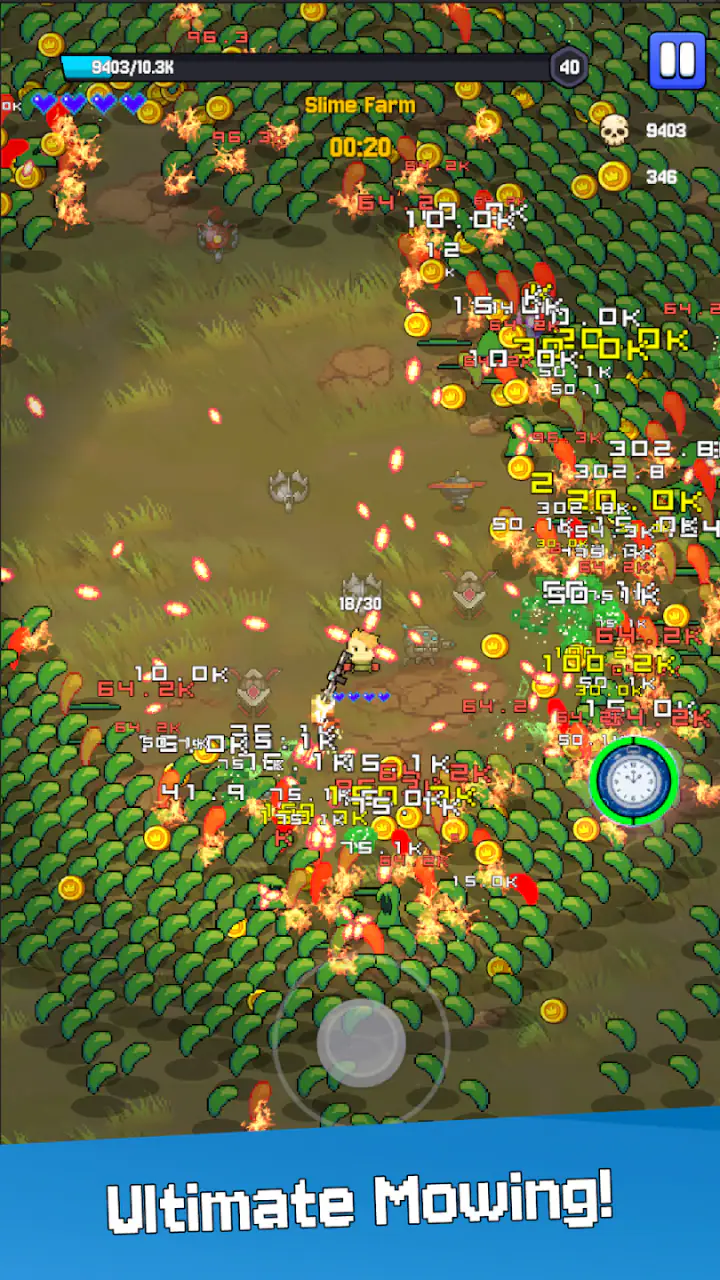
A practical approach is to treat the center of the available space as a resource, not as a destination. I do not stay there blindly, because surrounding threats can make the middle dangerous. Instead, I try to preserve a broad lane through the action. This gives me more choices when I need to redirect the group or reach a reward. It is a simple adjustment, but it makes runs feel less random and more connected to my own decisions.
Another useful habit is to make upgrade choices with the next minute in mind rather than the next few seconds. Immediate damage can feel attractive, especially when enemies are close, but a choice that improves consistency may help more once the battlefield becomes crowded. I found that the strongest runs were not always the ones with the most exciting individual selection. They were the runs where my decisions worked together and kept the squad functional under pressure.
This is also where the game can expose a weakness in the format. If you prefer clearly explained systems and highly transparent progression, the quick loop may feel too compressed. The action asks me to learn through repetition, and some players will enjoy that discovery while others will want more guidance. I would have appreciated a more generous learning curve for understanding how different decisions influence the squad over a complete run.
Why the five-minute format is genuinely useful
The short session length is not merely a marketing detail; it changes where I can use the game. I can play during a break, while waiting for an appointment, or at the end of the day when I do not want to begin a large adventure. A complete attempt has enough structure to feel like a real activity, but it does not demand the same attention as a lengthy campaign.
One everyday scenario fits it particularly well. If I have a few minutes before leaving home, I can start a run without worrying that I will need to stop halfway through a story sequence or abandon a long mission. The game gives me a self-contained challenge. If the attempt ends badly, I can immediately think about what I would change next time rather than feeling that I lost a large block of progress.
That convenience has a trade-off. Short runs can make repetition more noticeable because the opening moments may begin to feel familiar. I did not mind repeating the early phase while I was still refining my movement and choices, but the format will test your patience if you need every session to introduce something dramatically new. This is a game for improving a loop, not for constantly unveiling a new world.
It also works better for players who enjoy personal experimentation than for players who want a fixed, optimal route. I liked trying different approaches and seeing which decisions kept my group alive longer. If you would rather follow a precise build guide and expect the same plan to work every time, the less predictable pressure may be frustrating.
Where it stands beside familiar action alternatives
Compared with a traditional twin-stick shooter, this game places more emphasis on survival and gradual squad development than on aiming precision alone. I am still concerned with where danger is coming from, but the appeal is not only landing accurate shots. The larger question is how to keep the whole run stable as threats accumulate.
Compared with a conventional roguelike, the five-minute structure makes Crazy Gunner lighter and more immediately accessible. I am not entering a long dungeon with a large inventory of systems to memorize. That is an advantage when I want fast action, but it also means the game may feel less satisfying to someone who wants deep exploration, elaborate equipment management, or a story that develops over extended sessions.
It also differs from many idle or auto-focused mobile games because my attention still matters. I cannot treat the run as background activity and expect the same result. Movement, timing, and route selection remain important. On the other hand, anyone looking for a highly precise competitive action experience may find the survivor format too dependent on managing crowds and building momentum rather than mastering exact aim.
That comparison helps define the right expectations. I would choose this over a slower action game when I want immediate pressure and a self-contained challenge. I would choose a fuller roguelike instead when I have more time and want a broader sense of discovery. Neither choice is universally better; they serve different moods.
The friction points I noticed
The clearest limitation is repetition. A five-minute game depends on the quality of its decisions, enemy pressure, and progression loop. If those elements do not keep feeling meaningful, the short sessions can become predictable rather than convenient. I enjoyed the early learning process, but I can see some players reaching the point where another run feels like maintenance instead of discovery.
The game’s intensity may also be tiring for people who prefer relaxed mobile play. Even a brief attempt can demand continuous attention. There is little room to mentally switch off when the group is surrounded or when a poor route leaves the next escape unclear. I would not describe it as a calming game to play while multitasking. It is compact, but it is not passive.
The free price makes trying it straightforward, yet the presence of optional purchases ranging from under a dollar to amounts approaching thirty dollars per item is worth keeping in mind. I did not treat spending as a requirement for deciding whether the core loop works for me. My advice is to play enough free sessions to understand whether you enjoy the survival cycle before considering any purchase. In a game built around repeated runs, enthusiasm for the basic loop should come first.
There is also a difference between being easy to start and being easy to master. The controls and objective are approachable, but the pressure created by a growing crowd can expose mistakes quickly. New players may need several attempts before they stop reacting to every immediate threat and begin planning routes. That learning process is part of the appeal, although the game could be less welcoming to anyone who dislikes losing while figuring out its priorities.
The Teen content rating is another useful signal for families. I would not present this as a children’s game simply because the graphics are pixel-based. The action is built around constant combat and escalating danger, so parents should consider whether that style suits the player. For older teens and adults who like quick arcade pressure, the presentation feels appropriately focused.
Who should install it, and who should skip it
I recommend Crazy Gunner to players who enjoy survivor-style action, short roguelike runs, and the satisfaction of turning an underpowered start into a stronger squad. It is particularly well suited to someone who wants a game that fits around a busy day. The free download lowers the barrier to testing that match, and the current version, 1.5.0, is the one I would look for when installing it.
It is also a good choice for players who like learning by doing. The most rewarding part for me was not simply surviving; it was noticing why a promising run collapsed and changing one decision in the next attempt. If you enjoy refining movement, weighing risky rewards, and adjusting your approach to a crowded screen, the compact structure gives you plenty to work with.
I would skip it if your priority is a substantial narrative, calm progression, or a large world to explore. I would also hesitate to recommend it to someone who dislikes repeated attempts or finds mobile action games stressful. The game does not disguise its central loop, and its strengths are closely tied to that loop. If you do not enjoy the first several runs, additional play is unlikely to transform it into a different kind of experience.
Device compatibility is fairly broad: it requires Android 7.0 or later, which makes it accessible to many older Android phones as well as newer devices. Still, compatibility does not guarantee comfort. A smaller screen can make crowded moments harder to read, and anyone sensitive to busy action should try a few sessions before deciding whether the visual pressure feels manageable.
Ryki Studio has kept the concept focused rather than burying it beneath a complicated premise. That focus is valuable, but it places responsibility on the moment-to-moment design. I found the game most enjoyable when I approached it as a repeatable skill challenge, not as a game I would finish once and move on from. The question is less “How much content is there?” and more “Do I want to improve at this particular five-minute contest?”
My final recommendation
Crazy Gunner: Pixel Survivor is a focused action game with a clear reason to exist on mobile. Its strongest qualities are the compact runs, readable pixel style, and squad-building decisions that give movement a purpose beyond simply escaping. I liked that a session could be brief without feeling completely disposable, and I appreciated the way small route choices could decide whether a run recovered or collapsed.
Its limitations are equally clear. Repetition may become a problem, the action is not especially relaxing, and players who want a deep story or a slower tactical experience should look elsewhere. The optional purchase range also means I would keep my spending cautious until the free loop has earned that commitment. None of these issues ruin the game, but they define the audience it can satisfy.
With an average rating of 4.3 from over ten thousand ratings and more than one hundred thousand installs, it has already found a substantial audience for this style of quick survival action. Those figures do not replace personal taste, but they fit my impression that the basic idea is easy to understand and appealing to many mobile players.
My recommendation is simple: install it if you want short, repeatable bursts of pixel-art combat and enjoy improving through trial and error. Give it a fair run of attempts, pay attention to how your route affects the squad, and resist spending until the core challenge feels rewarding on its own. If that process sounds satisfying, this free action game from Ryki Studio is worth keeping on your phone; if you want a richer adventure or a gentler pace, your time will be better spent elsewhere.
FAQs for Crazy Gunner: Pixel Survivor
What is Crazy Gunner: Pixel Survivor?
Crazy Gunner: Pixel Survivor is a pixel-art survival action game built around fast shooting, enemy waves, and short combat sessions. You control a heavily armed character, move around compact arenas, collect useful upgrades, and try to survive increasingly difficult attacks. Its simple controls make it easy to start, while the growing enemy numbers and upgrade choices provide enough challenge for players who enjoy arcade-style roguelite games.
How do you play Crazy Gunner: Pixel Survivor?
Gameplay mainly focuses on movement, aiming or positioning your character, and defeating enemies before they surround you. During a run, you usually collect experience or rewards that unlock stronger abilities, weapons, or temporary improvements. The most effective approach is to keep moving, avoid crowded areas, prioritize dangerous enemies, and choose upgrades that work well together instead of selecting improvements randomly.
Is Crazy Gunner: Pixel Survivor free to download and play?
Crazy Gunner: Pixel Survivor can generally be downloaded at no initial cost, although the exact availability and monetization options may depend on the Android or iOS store listing in your region. Free versions of this type of game may include advertisements, optional purchases, or progress-related offers. It is worth checking the store page before installing if you prefer games without ads or in-app spending.
Does Crazy Gunner: Pixel Survivor require an internet connection?
The core survival gameplay may be playable without a continuous internet connection, which is convenient for quick sessions while traveling or when mobile data is unavailable. However, certain features can still require connectivity, including advertisements, cloud services, updates, leaderboards, or purchases. Because requirements may change between versions, players should verify the current store description and test the game after installation.
Is Crazy Gunner: Pixel Survivor suitable for all players?
The game is a good fit for players who enjoy pixel graphics, rapid combat, wave-based survival, and upgrading a character during repeated runs. It is less suitable for anyone looking for a relaxed adventure, a deep story, or highly realistic visuals. The action can become intense as enemies multiply, so younger players and parents should also review the age rating, advertising, and optional purchase information before downloading.
Pros
- Fast-paced shooting keeps short sessions exciting.
- Pixel-art visuals give the game a distinctive retro style.
- Simple controls are easy to learn on mobile.
- Weapon upgrades create satisfying progression.
- Offline play is convenient for gaming without internet.
Cons
- Repeated enemy waves can make later runs feel predictable.
- Random upgrades may lead to uneven or frustrating builds.
- Screen effects can make crowded battles difficult to read.
- Progression may feel slow without frequent play sessions.
- Ads or optional purchases may interrupt the overall flow.


